How Poor Sleep Sabotages Your Metabolism (And What You Can Do About It)
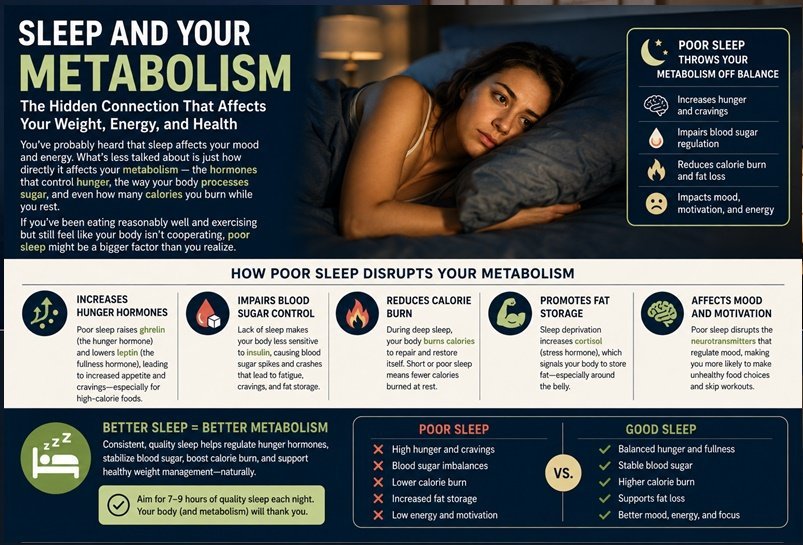
You’ve probably heard that sleep affects your mood and energy. What’s less talked about is just how directly it affects your metabolism — the hormones that control hunger, the way your body processes sugar, and even how many calories you burn while you rest. If you’ve been eating reasonably well and exercising but still feel like your body isn’t cooperating, poor sleep might be a bigger factor than you realize.
The Hunger Hormone Connection
Two hormones do most of the work regulating appetite: ghrelin, which signals hunger, and leptin, which signals fullness. Sleep deprivation throws both of them out of balance — ghrelin rises, leptin drops, and the net effect is a body that feels hungrier than it actually needs to be, while also feeling less satisfied after eating.
This isn’t a minor effect. Research on short-term sleep restriction has consistently found that people who are sleep-deprived report significantly higher hunger and appetite, particularly for calorie-dense, high-carbohydrate foods — the exact kind of cravings that make healthy eating harder to sustain, regardless of willpower.
Why You Crave Junk Food After a Bad Night
There’s a reason a rough night’s sleep so often leads to reaching for chips, sweets, or fast food the next day instead of a salad. Sleep deprivation appears to heighten activity in brain regions associated with reward and craving, while simultaneously dulling activity in regions responsible for impulse control and rational decision-making. In practical terms: your brain becomes both more drawn to junk food and less equipped to resist it, at the same time.
This helps explain why “just have more willpower” often fails as diet advice for chronically poor sleepers. The problem isn’t a lack of discipline — it’s a brain that’s biochemically primed to crave and reach for the wrong things after insufficient rest.
Insulin Sensitivity Takes a Hit
Beyond appetite, poor sleep directly affects how efficiently your body processes glucose. Studies on short-term sleep restriction have found measurable reductions in insulin sensitivity after just a few nights of inadequate sleep — meaning your body becomes less efficient at moving sugar out of your bloodstream and into your cells for energy. Over time, chronically impaired insulin sensitivity is a known risk factor for more serious metabolic issues.
This is part of why sleep deprivation and blood sugar irregularities so often show up together, and why addressing sleep is increasingly recognized as a meaningful piece of metabolic health — not just a nice-to-have alongside diet and exercise.
Cortisol: The Stress Hormone That Complicates Everything
Poor sleep elevates cortisol, your body’s primary stress hormone. Elevated cortisol has several downstream metabolic effects, including promoting fat storage — particularly visceral fat around the abdomen — and further disrupting blood sugar regulation. It also tends to increase cravings for high-sugar, high-fat foods, compounding the appetite dysregulation already caused by disrupted ghrelin and leptin levels.
In other words, poor sleep doesn’t just make you hungrier — it changes what you crave, how your body stores what you eat, and how efficiently you process it, all at the same time.
Fewer Calories Burned at Rest
There’s also a smaller, but real, effect on resting energy expenditure — the calories your body burns simply existing. Some research suggests that sleep deprivation modestly reduces resting metabolic rate, meaning a tired body burns slightly less energy at baseline than a well-rested one, even before accounting for the increased likelihood of overeating.
None of these individual effects are enormous on their own, but combined — increased hunger, stronger cravings, reduced impulse control, impaired insulin sensitivity, elevated cortisol, and slightly reduced calorie burn — they add up to a metabolic environment that’s working against you, not with you.
The Exercise Motivation Problem
There’s also an indirect metabolic cost that’s easy to overlook: poor sleep makes physical activity feel harder and less appealing. Sleep-deprived individuals consistently report lower motivation to exercise and perceive the same workout as more physically demanding compared to when they’re well-rested. This creates a quiet, compounding effect — less activity leads to fewer calories burned through movement, on top of the hormonal changes already working against you.
Breaking the Cycle
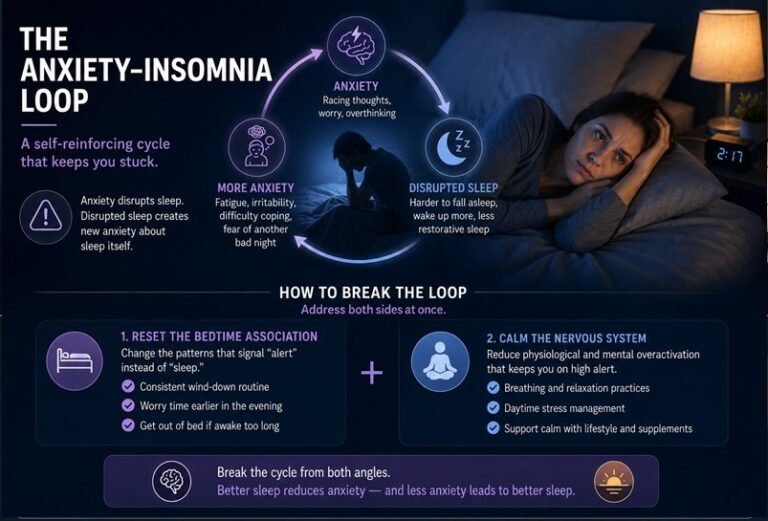
The frustrating part of this whole picture is that it can become circular: poor sleep disrupts metabolism and increases stress, which can make it harder to fall and stay asleep, which further disrupts metabolism. Breaking this cycle usually requires addressing sleep directly, rather than trying to out-diet or out-exercise the underlying hormonal disruption.
Prioritize consistent sleep timing. Irregular sleep schedules — even if you’re technically getting enough hours — appear to have their own negative effect on metabolic markers, independent of total sleep duration. Going to bed and waking up at consistent times supports more stable hormone regulation than the same total hours spread inconsistently.
Address the nervous system side of sleep, not just duration. Since elevated cortisol plays such a direct role in the metabolic disruption caused by poor sleep, supporting genuine relaxation before bed — not just lying in bed for eight hours while stressed — matters as much as total sleep time. This is part of why formulas that combine calming ingredients like GABA and L-theanine alongside melatonin, such as YuSleep, are designed to address more than just falling asleep faster — they’re aimed at supporting the kind of deep, restorative sleep that actually lowers cortisol and supports healthier hormone regulation overnight.
Support natural melatonin and serotonin balance. Beyond its role in sleep timing, melatonin has been studied for broader effects on metabolic regulation, and serotonin (supported by ingredients like 5-HTP and vitamin B6) plays a role in mood and appetite regulation as well. A formula addressing both angles is working with more of the relevant biology than a single-ingredient approach.
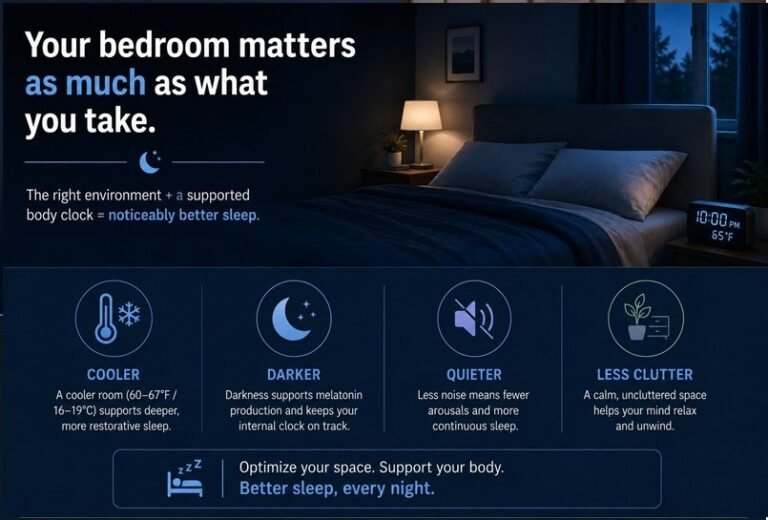
Don’t skip the basics. Reducing caffeine and alcohol close to bedtime, minimizing screen exposure in the evening, and keeping your bedroom cool and dark all support the deeper sleep stages most closely tied to healthy metabolic function.
Why This Matters Beyond the Scale
It’s worth being clear: sleep isn’t a magic weight-loss shortcut, and no supplement replaces a reasonable diet and regular movement. But if you’ve been doing “everything right” on the diet and exercise front and still feel like your body is working against you, chronically poor sleep is a genuinely underappreciated variable — one that affects hunger, cravings, blood sugar, fat storage, and even your motivation to move, all at once.
Addressing sleep quality isn’t a replacement for healthy habits elsewhere — it’s the foundation that makes those other habits actually work the way they’re supposed to.
Final Thoughts
The connection between sleep and metabolism runs deeper than most people realize — touching hunger hormones, blood sugar regulation, fat storage, and even the motivation to exercise. If your metabolism feels like it’s working against you despite your best efforts elsewhere, it may be worth looking at your sleep quality as seriously as you look at your diet, rather than treating it as a separate, lower-priority issue.
>> Watch this video to find out how to have a good sleep!
These statements have not been evaluated by the FDA. This product is not intended to diagnose, treat, cure, or prevent any disease. This article is for informational purposes only and is not a substitute for professional medical or nutritional advice.