
A Sleepless Journey: How Natural Sleep Support Helped Someone With Chronic Insomnia
Chronic insomnia doesn’t just steal your nights — it quietly erodes everything else. Your patience, your focus at work, your relationships, your health. For the millions of people who deal with it, the search for something that actually helps can feel endless, filled with false starts and products that promise more than they deliver.
The story below is a composite account, drawn from patterns commonly described by people dealing with long-term sleep struggles, illustrating what a realistic journey toward better sleep with a natural formula like YuSleep can look like. It’s not a single verified individual’s medical record, but it reflects the kind of experience many chronic insomnia sufferers report.
Where It Usually Starts
For most people who develop chronic insomnia, it doesn’t happen overnight. It builds gradually — a stressful period at work, a few weeks of poor sleep that never quite resolve, and suddenly bedtime itself becomes a source of anxiety rather than rest. The bed, which should be a place of comfort, starts to feel like a battleground.
A common pattern looks like this: lying awake for an hour or more before falling asleep, waking up two or three times during the night for no clear reason, and then facing mornings that feel unrefreshing no matter how many hours were technically spent in bed. Over months, this cycle compounds — daytime fatigue leads to more caffeine, more caffeine disrupts sleep further, and the cycle deepens.
The Trial-and-Error Phase
Most people who eventually turn to a formula like YuSleep have already tried several other approaches. This often includes:
- Over-the-counter sleep aids that leave a groggy, “hungover” feeling the next morning
- Basic melatonin gummies that seem to help for a week or two before losing effectiveness
- Prescription sleep medication, which works but comes with concerns about dependency and side effects
- Lifestyle changes — cutting caffeine, exercising more, trying meditation apps — that help somewhat but don’t fully solve the problem
- Simply accepting poor sleep as a permanent part of life
This trial-and-error phase is exhausting in its own right. Each failed attempt chips away at hope that a real solution exists, and it’s common for people to become skeptical of new products by the time they consider trying something like YuSleep.
What Changes With a Multi-Ingredient Approach
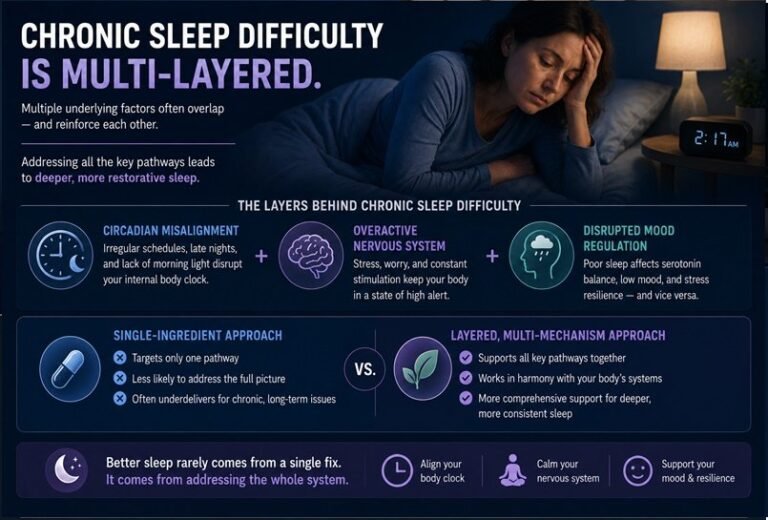
For people whose insomnia is tied to an anxious, overactive mind rather than a simple circadian mismatch, a plain melatonin supplement often isn’t enough — because melatonin alone doesn’t do much to quiet racing thoughts. This is frequently the point where a broader formula, combining calming ingredients like L-theanine and GABA alongside melatonin and mood-supportive nutrients like 5-HTP, tends to make a more noticeable difference.
A realistic timeline often looks something like this:
First few nights: A subtle shift — falling asleep takes a little less time, and the mind feels less “wired” while lying in bed.
One to two weeks in: Nighttime awakenings start to reduce in frequency. Where waking up two or three times a night was normal, it becomes more common to wake up once, or not at all.
Three to four weeks in: Mornings start to feel different. Instead of dragging through the first few hours of the day, there’s more natural energy and mental clarity. This is often described as the most meaningful shift — not just sleeping more, but actually feeling the benefit of that sleep during the day.
Beyond a month: Sleep starts to feel less like something to manage and more like something that just happens. Bedtime stops being a source of dread.
The Emotional Side of Better Sleep
What’s often underappreciated in conversations about sleep supplements is the emotional weight that chronic insomnia carries — and the relief that comes with resolving it. Beyond the physical benefits, many people describe a kind of psychological shift: no longer approaching bedtime with anxiety about whether tonight will be another bad night. That shift in mindset, on its own, often reduces the very anxiety that was contributing to the sleep problem in the first place, creating a positive cycle instead of a negative one.
Improved sleep also tends to ripple outward into other parts of life — steadier mood, more patience, better focus at work, and even improved relationships, since chronic sleep deprivation often shows up as irritability or emotional reactivity that has nothing to do with sleep on the surface, but everything to do with it underneath.
What This Story Represents
This account isn’t meant to promise identical results for everyone — individual experiences with any supplement vary based on the underlying causes of a person’s sleep issues, their overall health, and how consistently they use the product alongside healthy sleep habits. But it does reflect a pattern commonly described by people dealing with chronic, stress-related insomnia: gradual, layered improvement rather than an instant fix, and a growing sense that sleep no longer needs to be fought for every night.
If This Sounds Familiar
If any part of this story resonates — the trial-and-error, the exhaustion of trying yet another product, the hope that this time might be different — it may be worth giving a formula built around addressing multiple causes of poor sleep, rather than just one, a genuine trial. A 60-day money-back guarantee means the financial risk of finding out is limited, even if the emotional stakes of chronic insomnia feel much higher.
Final Thoughts
Chronic sleep struggles rarely have a single cause, which is exactly why single-ingredient solutions often fall short for people dealing with them long-term. A layered, natural approach — addressing the nervous system, mood, and circadian rhythm together — reflects how real recovery from chronic insomnia tends to happen: gradually, consistently, and holistically.
>> Discover How To Have a Good Sleep at Night – Watch Video!
Individual results vary. These statements have not been evaluated by the FDA. This product is not intended to diagnose, treat, cure, or prevent any disease. If you are dealing with chronic insomnia, consult a healthcare professional for proper evaluation and guidance.