Melatonin vs. CBD vs. Magnesium vs. Multi-Ingredient Formulas: A Natural Sleep Aid Comparison (In-Depth Guide)
Walk into any pharmacy or search “natural sleep aid” online, and you’ll find yourself facing a genuinely confusing landscape: melatonin, CBD, magnesium, valerian root, multi-ingredient blends, and more, each with passionate advocates and each claiming to be the answer. Rather than picking one at random, it helps to understand what each category is actually designed to do — because the honest answer is that they’re not interchangeable, and the right choice depends heavily on what’s actually causing your sleep issues.
Melatonin: The Circadian Timing Tool
What it does: Melatonin is a hormone your body naturally produces to signal nighttime. Supplementing it directly provides that same circadian cue.
Best suited for: Circadian rhythm misalignment — jet lag, shift work schedule changes, or a generally shifted sleep schedule. It’s less effective as a standalone solution for anxiety-driven insomnia or frequent nighttime waking, since it addresses timing rather than nervous system arousal or sleep maintenance.
What the research actually shows on effectiveness: A meta-analysis of 19 randomized controlled trials involving 1,683 participants found that melatonin supplementation reduced the time it takes to fall asleep by roughly 7 minutes and increased total sleep time by roughly 8 minutes compared to placebo, with no evidence of tolerance developing with continued use.[^1] This is a genuine, measurable effect — but a modest one, which is part of why melatonin alone often isn’t sufficient for people with more complex or severe sleep difficulty.
The bigger, more urgent limitation: label accuracy. This is arguably the single most well-documented problem in the entire natural sleep aid category. A study published in the Journal of Clinical Sleep Medicine tested 31 commercial melatonin supplements and found that more than 71% failed to meet their labeled content within a 10% margin — with actual melatonin content ranging from 83% less to 478% more than what was stated on the label, and lot-to-lot variability within a single product reaching as much as 465%.[^2][^3] The same study found detectable, undisclosed serotonin — a controlled substance not authorized for supplement sale — in roughly one in four of the products tested.[^2] A more recent 2023 study published in JAMA focused specifically on melatonin gummies, found that 22 of 25 products tested (88%) were inaccurately labeled, with actual content ranging from 74% to 347% of the declared amount; one product contained no detectable melatonin at all.[^4][^5][^6] This isn’t a fringe concern — gummies are among the best-selling melatonin formats on the market.[^6]
Limitations: Standard synthetic melatonin often delivers a relatively fast, single spike that can wear off partway through the night, which is part of why some users report falling asleep fine but waking up a few hours later. Given the label accuracy findings above, choosing a melatonin product from a manufacturer with disclosed, verifiable quality control practices matters considerably more than the marketing might suggest.
CBD: The Anxiety and Pain Angle
What it does: CBD (cannabidiol) is a non-intoxicating compound derived from hemp, studied primarily for potential effects on anxiety and pain perception, both of which can indirectly support sleep if either is a significant contributing factor to your sleep difficulty.
Best suited for: People whose sleep issues are specifically tied to chronic pain or significant anxiety, where addressing those underlying issues may improve sleep as a secondary effect.
Limitations: CBD doesn’t directly address circadian timing the way melatonin does, meaning it’s not particularly effective for jet lag or schedule-related sleep issues. Research on CBD specifically for sleep (as opposed to anxiety or pain generally) is still relatively limited compared to more established ingredients like melatonin. Quality and dosing consistency across CBD products also varies significantly industry-wide — the same JAMA study that examined melatonin gummy labeling accuracy also tested products declaring CBD content, and found the actual measured amount ranged from 10.6mg to 31.3mg per serving against label claims, underscoring that labeling inconsistency isn’t unique to melatonin alone.[^4] CBD is also subject to a more complex regulatory landscape than standard dietary supplement ingredients, which is worth being aware of.
Magnesium: The Muscle Relaxation and Baseline Support Option
What it does: Magnesium is an essential mineral involved in hundreds of bodily processes, including muscle relaxation and nervous system function. Relatively common magnesium deficiency has been associated with poorer sleep quality in observational research, with proposed mechanisms including magnesium’s role in supporting melatonin production and reducing cortisol levels.[^7]
What the research actually shows: The evidence here is more encouraging than for some other single-ingredient options, though still developing. A systematic review and meta-analysis of three randomized controlled trials in older adults (151 total participants) found that magnesium supplementation significantly reduced the time it took to fall asleep by approximately 17 minutes compared to placebo.[^8] A separate double-blind, placebo-controlled trial in elderly adults with primary insomnia found that magnesium supplementation over eight weeks improved sleep efficiency from roughly 75% to 85%, alongside increased serum melatonin and reduced cortisol levels — a result consistent with the proposed mechanism.[^9] A more recent, larger randomized trial (155 adults aged 18–65) using magnesium bisglycinate specifically is part of a growing body of research aimed at confirming these effects in broader, non-elderly populations.[^10] That said, a broader systematic review of magnesium and sleep quality noted inconsistent results across smaller interventional trials — two showed improvement, three showed none — highlighting that while the observational association between magnesium status and sleep is fairly well established, well-powered interventional evidence is still accumulating.[^7]
Best suited for: People with an actual magnesium insufficiency, or those whose sleep difficulty involves physical muscle tension or restlessness (including restless leg-type symptoms) rather than primarily an overactive mind. Given the research above, magnesium appears particularly relevant for older adults specifically.
Limitations: For people who aren’t magnesium-deficient, supplementing further may provide limited additional sleep benefit, since it’s addressing a specific nutritional gap rather than actively promoting sleep onset the way melatonin or calming amino acids do. It also doesn’t address circadian timing or serotonin-related mood regulation on its own.
Valerian Root: The Traditional Herbal Option
What it does: Valerian root is a long-used herbal remedy believed to have mild sedative properties, potentially through interaction with GABA receptors, similar in concept (though a different mechanism) to how GABA supplementation works.
Best suited for: People seeking a traditional herbal option, generally for mild sleep difficulty rather than significant chronic insomnia.
What the research actually shows — and why it’s genuinely mixed: This is one of the more extensively studied, and most inconsistently supported, natural sleep ingredients on the market. A 2010 meta-analysis of 18 randomized, placebo-controlled trials found that while valerian showed a statistically significant benefit on a simple “improved sleep, yes or no” measure (relative risk of 1.37), it showed no meaningful difference from placebo on the standardized measures of sleep quality or sleep onset latency in minutes — the researchers concluded that effectiveness “has not been demonstrated with quantitative or objective measurements.”[^11] A separate 2006 systematic review of 16 trials found that 9 of the 16 studies did not show positive outcomes for sleep quality at all.[^12] More recently, a comprehensive 2020 systematic review and meta-analysis covering 60 studies (nearly 6,900 participants total) suggested that some of the inconsistency across the research may stem from variable quality of the herbal extracts used across different studies and products — with more reliable effects associated with whole root/rhizome preparations specifically.[^13] An umbrella review of valerian evidence has also pointed out that insomnia treatments generally, whether behavioral or pharmacological, tend to show a substantial placebo effect — making it genuinely difficult to isolate valerian’s specific contribution from expectation effects alone.[^14]
Limitations: Given the mixed and inconsistent research base described above, valerian is reasonably considered a low-risk option worth trying for mild sleep difficulty, but not one with strong, consistent evidence behind it the way melatonin or (increasingly) magnesium have. It also has a distinctive, often off-putting smell and taste that some people find hard to tolerate in certain product forms.
Multi-Ingredient Formulas: Addressing Several Mechanisms at Once
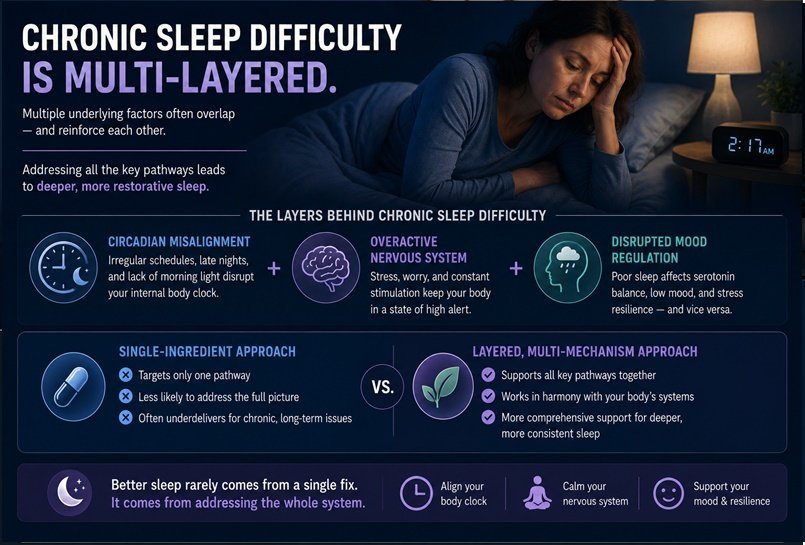
What they do: Rather than relying on a single ingredient and mechanism, multi-ingredient formulas combine several complementary ingredients targeting different aspects of the sleep process simultaneously — circadian timing, nervous system relaxation, and mood/serotonin regulation, for example.
Best suited for: People whose sleep issues involve more than one underlying cause — which, realistically, describes a large share of chronic sleep sufferers. Someone dealing with both a shifted circadian rhythm and an anxious, overactive mind at bedtime is unlikely to find complete relief from melatonin alone, or from a calming ingredient alone; addressing both mechanisms together tends to produce more complete results.
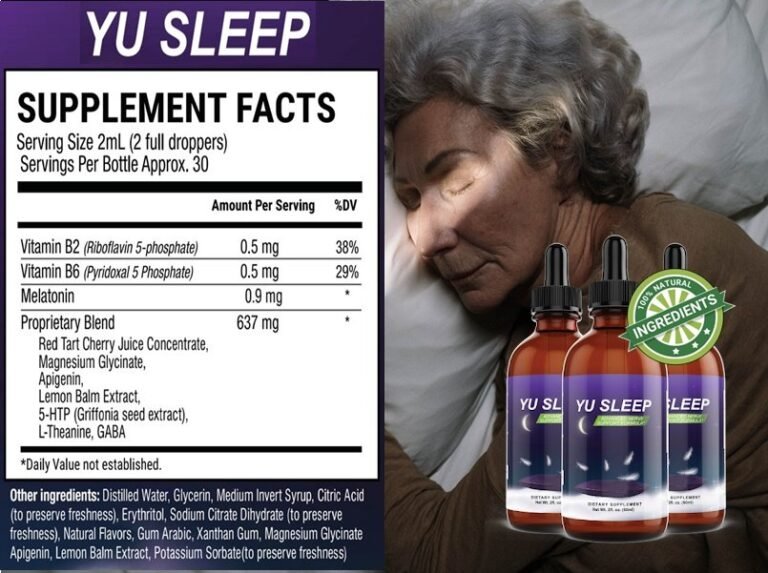
Example: YuSleep combines melatonin and red tart cherry extract (circadian timing and sustained-release melatonin support), GABA and L-theanine (nervous system calm, addressing the racing-thoughts and difficulty-relaxing pattern that single-ingredient melatonin doesn’t touch), and 5-HTP with vitamin B6 and B12 (serotonin support, which feeds into both mood regulation and natural melatonin synthesis).
>> Discover How To Have a Good Sleep at Night – Watch Video!
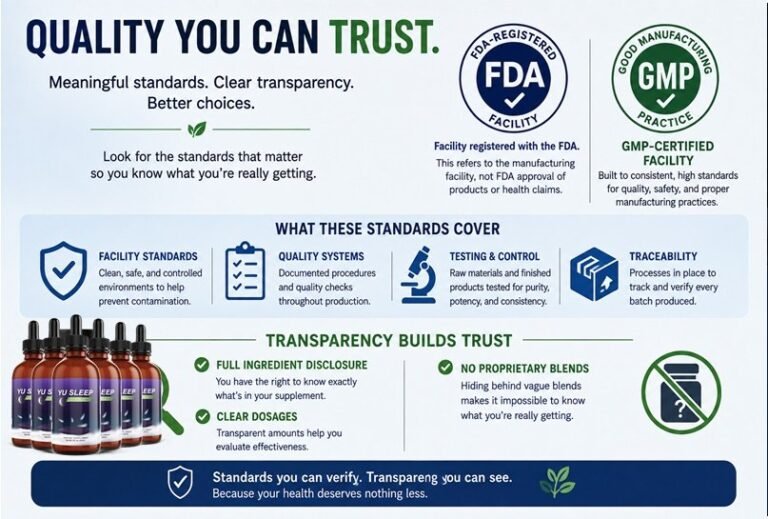
A practical note connecting back to the label accuracy issue above: Given how widespread melatonin labeling inaccuracy is across the broader supplement industry, choosing any melatonin-containing product — single-ingredient or multi-ingredient — from a manufacturer that discloses specific ingredient amounts and follows documented quality control practices (rather than a vague proprietary blend) is a meaningful, checkable way to reduce your exposure to this well-documented industry-wide problem.
Limitations: Multi-ingredient formulas are generally priced higher than single-ingredient products, given the more complex formulation and typically larger ingredient list. They also require understanding your specific sleep issue less precisely than choosing a single targeted ingredient, since you’re addressing multiple potential causes rather than one specific, identified mechanism — though for many people, not knowing the precise underlying cause is exactly why a broader approach makes practical sense.
A Simple Framework for Choosing
If your main issue is timing (jet lag, shift work, a shifted sleep schedule): Melatonin alone may be sufficient, particularly for short-term or situational use.
If your main issue is anxiety or chronic pain interfering with sleep: CBD may be worth exploring, ideally alongside addressing the underlying anxiety or pain condition directly with a healthcare provider.
If you suspect a magnesium deficiency, have muscle tension/restlessness, or are an older adult: Magnesium may provide meaningful benefit — this is one of the better-supported single-ingredient options based on recent trial data, particularly for sleep onset time.
If you want a traditional herbal option and have relatively mild sleep difficulty: Valerian root is a reasonable, low-risk option to try, understanding the research behind it is genuinely inconsistent — some meta-analyses find a subjective benefit, others find no measurable difference from placebo.
If your sleep issues involve multiple factors — timing, an overactive mind, mood, and inconsistent sleep depth: A multi-ingredient formula addressing several of these mechanisms simultaneously is more likely to produce comprehensive results than a single-ingredient approach, particularly for people who have already tried a single ingredient like plain melatonin without full success.
Why Most Chronic Sleep Sufferers Benefit From a Multi-Ingredient Approach
In practice, most people who struggle with sleep on an ongoing basis — rather than a purely situational issue like occasional jet lag — have more than one contributing factor. Chronic sleep difficulty often involves some combination of circadian misalignment, an overactive nervous system, and disrupted mood regulation, layered on top of each other after months or years of poor sleep. This is exactly why single-ingredient products frequently underdeliver for people with more entrenched sleep issues, and why layered, multi-mechanism formulas have become an increasingly common approach in the natural sleep support category.
Final Thoughts
There’s no single “best” natural sleep aid in the abstract — the right choice depends entirely on what’s actually driving your sleep difficulty. Melatonin, CBD, magnesium, and valerian root each address a specific, narrower piece of the puzzle, and each comes with its own evidence base — ranging from magnesium’s increasingly encouraging trial data, to valerian’s genuinely inconsistent research history, to melatonin’s well-established but modest effect size undermined industry-wide by serious, well-documented labeling accuracy problems. For the many people whose sleep issues involve more than one underlying factor, a thoughtfully formulated multi-ingredient approach — combining circadian support, nervous system calm, and mood-related serotonin support, from a manufacturer that discloses exact ingredient amounts rather than a vague blend — tends to address more of the actual problem than betting on any single ingredient alone.
>> Discover How To Have a Good Sleep at Night – Watch Video!
These statements have not been evaluated by the FDA. This product is not intended to diagnose, treat, cure, or prevent any disease. This article is for general informational purposes and is not a substitute for professional medical advice. Consult a healthcare professional before starting any new supplement, particularly if you are taking medication or have an existing medical condition.
References
- Meta-analysis of 19 RCTs (1,683 subjects) on melatonin for primary sleep disorders, PLOS ONE, Vol. 8 (2013), as cited in Bio Absorb Nutraceuticals, “Why Don’t Doctors Recommend Melatonin?” https://www.bioabsorbnutraceuticals.com/blogs/melatonin/why-dont-doctors-recommend-melatonin
- Erland, L.A. & Saxena, P.K. (2017). “Melatonin Natural Health Products and Supplements: Presence of Serotonin and Significant Variability of Melatonin Content.” Journal of Clinical Sleep Medicine, 13(2), 275-281. https://pubmed.ncbi.nlm.nih.gov/27855744/
- American Academy of Sleep Medicine. “Study finds that melatonin content of supplements varies widely.” https://aasm.org/study-finds-that-melatonin-content-of-supplements-varies-widely/
- Cohen, P.A. et al. (2023). “Quantity of Melatonin and CBD in Melatonin Gummies Sold in the US.” JAMA. https://jamanetwork.com/journals/jama/fullarticle/2804077
- CBS News. “22 of 25 melatonin gummy products were inaccurately labeled, study finds.” https://www.cbsnews.com/news/melatonin-gummies-inaccurately-labeled-study/
- TIME. “Some Melatonin Supplements Have Dramatically Different Dosages Than Advertised, New Study Says.” https://time.com/6274507/melatonin-sleep-supplement-dosage-off/
- PMC. “Magnesium Bisglycinate Supplementation in Healthy Adults Reporting Poor Sleep: A Randomized, Placebo-Controlled Trial.” https://www.ncbi.nlm.nih.gov/pmc/articles/PMC12412596/
- Mah, J. & Pitre, T. (2021). “Oral magnesium supplementation for insomnia in older adults: a systematic review & meta-analysis.” BMC Complementary Medicine and Therapies, 21(1), 125. Summarized via Consensus Academic Search Engine. https://consensus.app/questions/magnesium-supplement-for-sleep/
- Dr Kumar Discovery. “Magnesium Supplementation Improves Sleep Quality in Elderly with Insomnia” (summary of double-blind placebo-controlled trial). https://drkumardiscovery.com/posts/effect-magnesium-supplementation-primary-insomnia-elderly-double-blind-placebo-controlled/
- Schuster, J., Cycelskij, I., Lopresti, A., Hahn, A. (2025). “Magnesium Bisglycinate Supplementation in Healthy Adults Reporting Poor Sleep: A Randomized, Placebo-Controlled Trial.” Nature and Science of Sleep, 17, 2027-2040. https://pubmed.ncbi.nlm.nih.gov/40918053/
- Fernández-San-Martín, M.I. et al. (2010). “Effectiveness of Valerian on insomnia: a meta-analysis of randomized placebo-controlled trials.” Sleep Medicine, 11(6), 505-511. https://pubmed.ncbi.nlm.nih.gov/20347389/
- American Journal of Medicine. “Valerian for Sleep: A Systematic Review and Meta-Analysis” (2006, 16-trial review). https://www.amjmed.com/article/S0002-9343(06)00275-0/abstract
- Shinjyo, N., Waddell, G., & Green, J. (2020). “Valerian Root in Treating Sleep Problems and Associated Disorders—A Systematic Review and Meta-Analysis.” Journal of Evidence-Based Integrative Medicine. https://pubmed.ncbi.nlm.nih.gov/33086877/
- ScienceDirect. “Does valerian work for insomnia? An umbrella review of the evidence.” https://www.sciencedirect.com/science/article/pii/S0924977X24000294
Note: These references support general statements about the research evidence behind common natural sleep ingredients. They are provided for informational context and do not constitute an endorsement of YuSleep specifically by the cited sources. Individual results from any supplement may vary, and research in this area continues to evolve.